Hakomi Story in 7 steps
#1 Ron
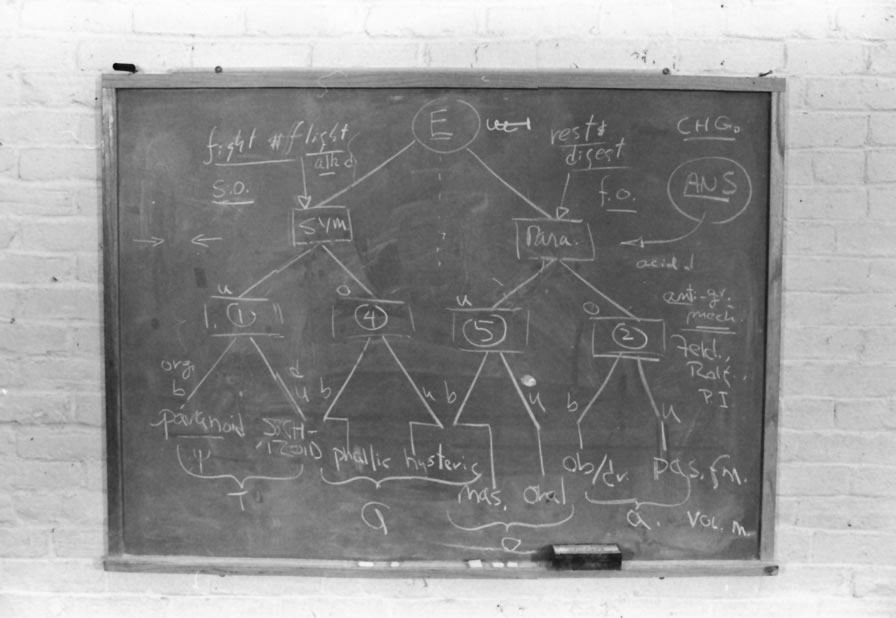
Even though he was a compelling thinker and erudite academic, Ron Kurtz was an easy-going, funny, and unorthodox human being. No matter how serious the issue, meetings with him had everybody laughing and bantering with each other.
As a teacher, he was hardly ever prepared for his classes. Nonetheless, students were mesmerized by his spontaneous, witty, creative, and still scientifically founded presentations..
Ron read a lot. Every day. And his next talk would integrate what he had just read, infused with his infectious sense of humor. This combination made listening to him fascinating and delightful..
Ron’s way of handling life was often chaotic but always inspiring. He certainly had an ear for what the zeitgeist was whispering, generally years or even decades before it became mainstream.
For most of his students, Ron Kurtz was the teacher of a lifetime.

#2 The name "Hakomi"
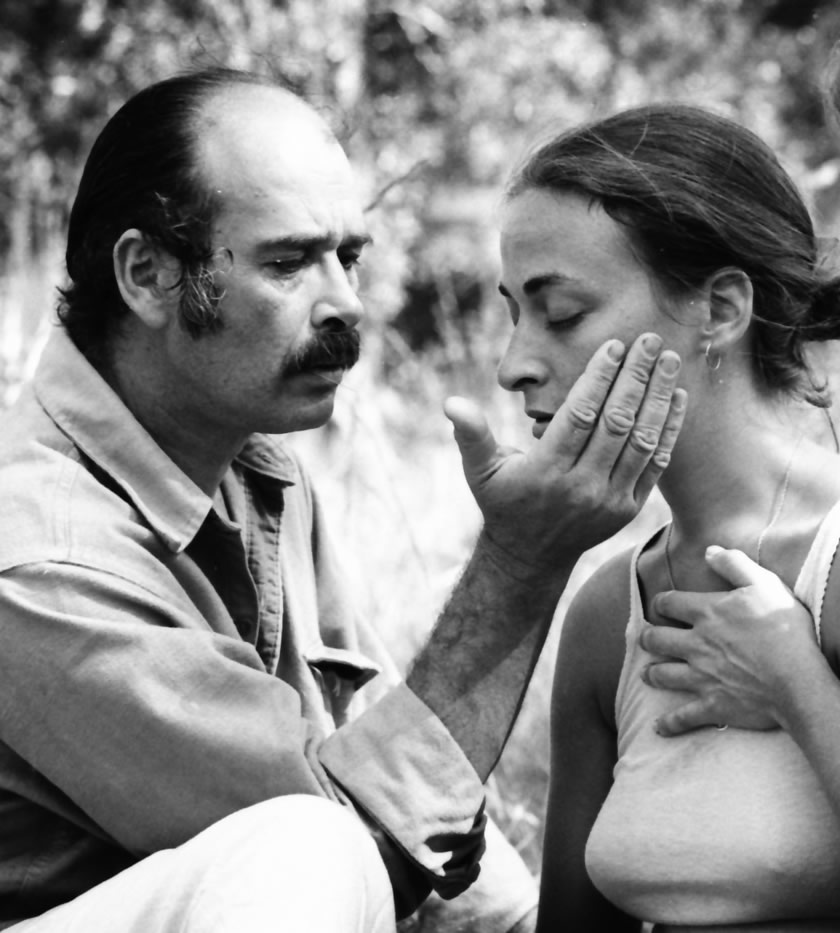
"Hakomi" came as a surprise. As the founding members of the Institute were struggling to find a professional-sounding name for the work, one member had a dream...
…in which he was handing Ron a sheet of stationery with the letterhead “Hakomi Institute” on it. He did not know what it meant and consulted Chinese and Japanese dictionaries without success. Then, weeks later, he came running in excitedly: “I found the word in a book on the Hopi American Indian culture!” The meaning of the word turned out to be: “Who are you?” or translated closer to the Hopi way of thinking: “How do you stand in relation to these many realms?”
Given how precisely the word seemed to mirror the core of what the method was about, the team gave up searching for a more professional name and surrendered to the dream.
Later, we asked Grandfather David of the Hopi Nation to give his blessing to us to use the word (which he did).
Today, there are questions about the cultural appropriation of the name "Hakomi." The Hakomi Institute is engaged in deep inquiry and meetings with the Hopi nation to determine whether we will continue using it.
#3 The creation of the Institute
In 1980, eight surprising characters came together in Putnam, Connecticut, to create an Institute around the intuitive and revolutionary approach Ron Kurtz developed over 15 years.
These eight were: Ron Kurtz himself, Pat Ogden, Dyrian Benz, Devi Records, Phil del Prince, Halko Weiss, Jon Eisman, and Greg Johanson.
The idea was to create a teachable method, including didactic concepts, a curriculum, literature, a body of exercises, and a corporate structure.
Each member had unique gifts around psychotherapy. They made up for what they lacked in business savvy with scores of enthusiasm and vision.
None would have guessed what would become of their project.
In the 40 years since its founding, Hakomi has become a leader in mindfulness and somatics.
#4 The pioneering use of Mindfulness
In the wild sixties of San Francisco, Ron Kurtz became familiar with the practice of mindfulness.
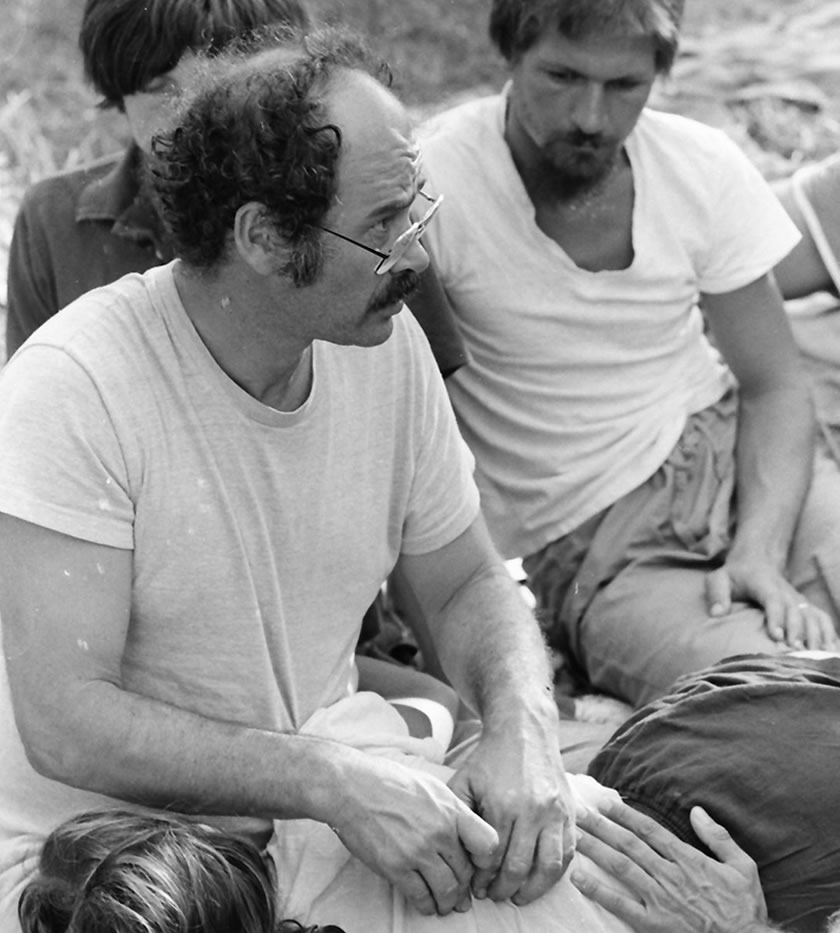
He immediately started using it in his humanistic “gestalt-style” therapy groups. At first, Ron embedded mindfulness into existing exercises and interventions. However, as his work evolved, it became clear that what would later be called the “Hakomi Method” needed therapeutic processes that were more compatible with Eastern philosophy. Consequently, Ron formulated a mindfulness-centered methodology organized around acceptance, curiosity, the cultivation of consciousness, an experimental attitude, and a particular client-therapist relationship. Much more than an “add-on,” Mindfulness now shapes and colors everything a Hakomi therapist does
Much more than an "add-on", Mindfulness now shapes and colors everything a Hakomi therapist does.

#5 The body
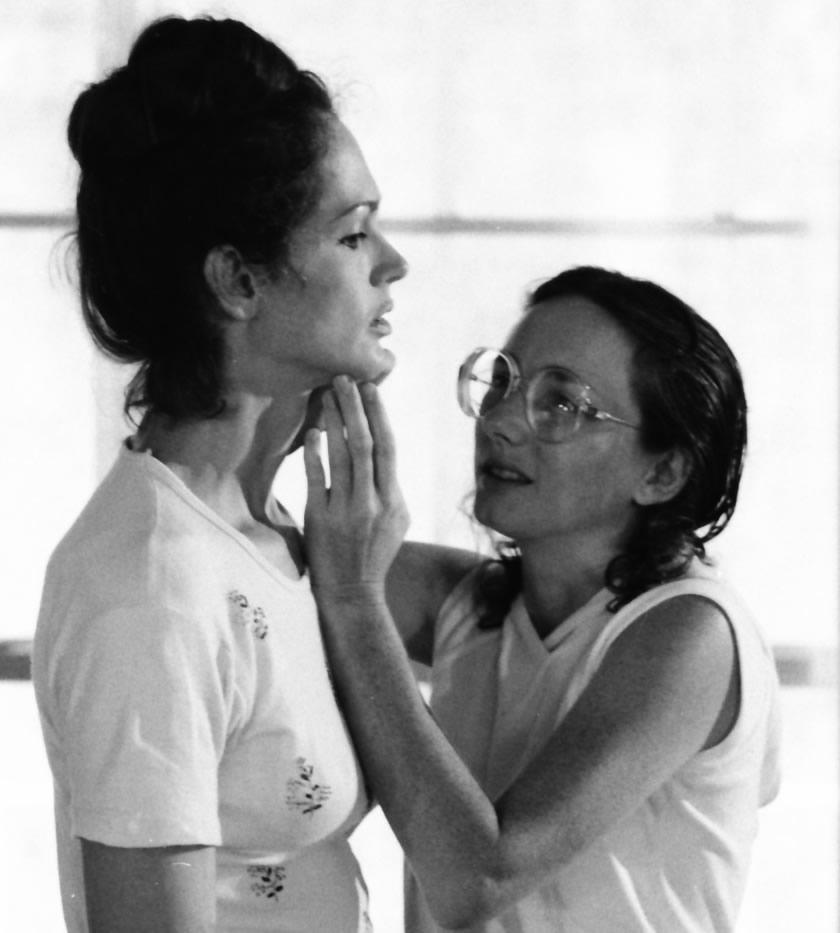
From a Hakomi perspective, the body must be a part of any psychodynamic therapy because we are more than just mental beings.
The body connects us to our present experience in the here-and-now. It also harbors memories from our early life and is the locus of our subjective experience. While we cannot always consciously recall the powerful experiences that shape our personalities, they can be felt in the body and made conscious by the observing qualities of mindfulness.
For this reason, mindfulness works best in tandem with the body. Instead of creating meaning solely through mental models, Hakomi relies on direct observation via the senses, known as “bottom-up processing.”
This makes Hakomi "body-centered".
#6 Hakomi spread- ing into the world
Who would have thought!! A group of starry-eyed young therapists starting an institute, and forty years later, we can hold hands with Hakomi-colleagues all over the planet.
For years, we have operated as a connected satellite system with a hub in Boulder and local teams in many places. It was primitive, but it worked. Currently, we are creating a more centralized organization with a worldwide communications network.
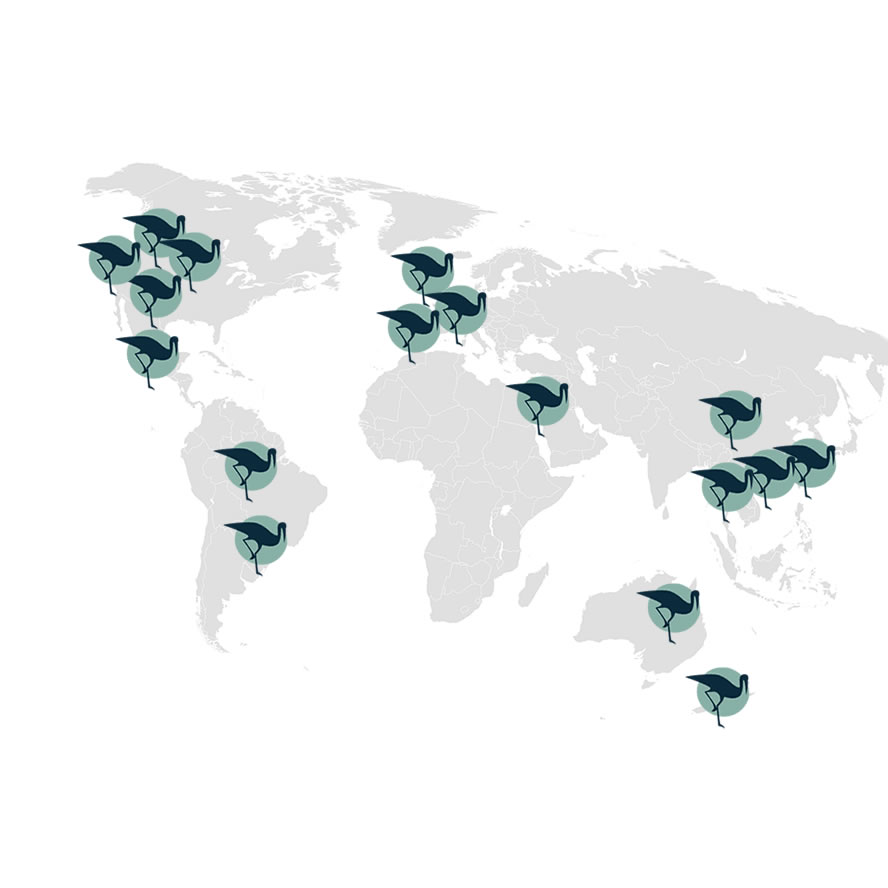
Our training locations span the US, Canada, Germany, Israel, Spain, England, Ireland, Japan, Korea, China, Hongkong, New Zealand, Australia, and Brazil. And then there are many other places, such as Inner Mongolia, Russia, most European countries, Argentina, Columbia, and Mexico, where we have had Hakomi workshops.
We have published numerous books, chapters in books, articles, and our Hakomi Forum journal. Some focus on the Method, while others are Hakomi-inspired.
In addition to mental health professionals, we train couples and executives, coaches, massage therapists, and several other audiences.
It’s been quite a trip!
#7 What is unique about Hakomi
The Hakomi Method is a unique combination of cutting-edge science, depth psychology, and elements of the perennial wisdom traditions of the East.
Planted upon the notion of furthering the development of consciousness rather than fixing defects (taken from the East), it has also sourced input from a wide range of established forms of psychotherapy: Freudian, Reichian, Ericksonian, as well as from pioneers like Feldenkrais, Perls, or Rogers.
New developments from neuroscience, complex adaptive systems, attachment theory, and so forth keep the method fully up to date.